

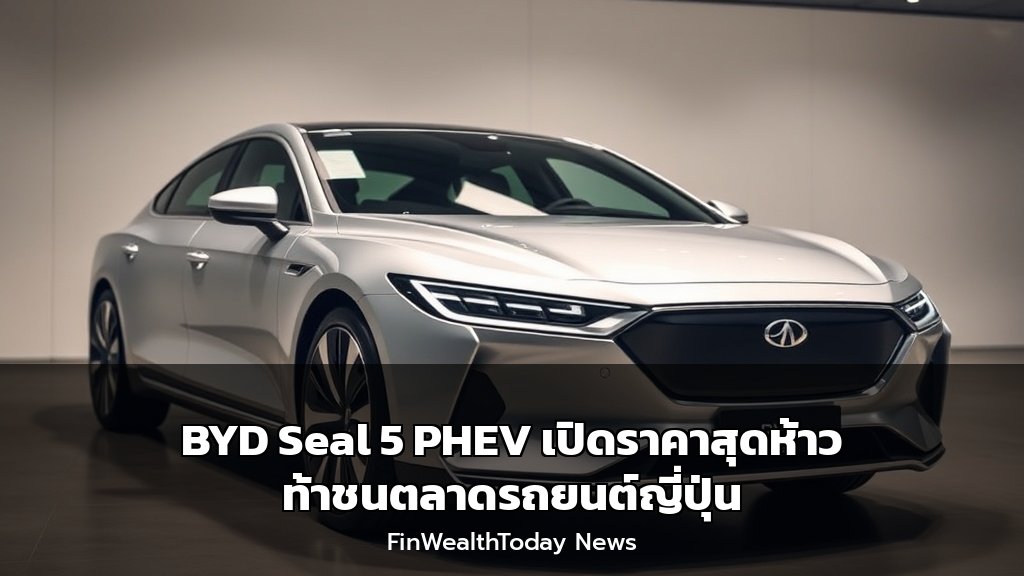
หลังจากที่ตลาดรถยนต์ไฟฟ้าในไทยร้อนแรงอย่างต่อเนื่อง BYD ผู้ผลิตยานยนต์ไฟฟ้าชั้นนำจากจีน ก็เตรียมยิงธนูคำท้าใหม่สู่ค่ายรถยนต์ญี่ปุ่นด้วยการประกาศราคา BYD Seal 5 DM-i Plug-in Hybrid อย่างเป็นทางการในวันที่ 8 สิงหาคมนี้ ด้วยราคาอยู่ที่ประมาณ 650,000 ถึง 750,000 บาท ซึ่งเป็นช่วงราคาที่ตรงเป๊ะกับการแข่งขันกับ Toyota Yaris Ativ HEV และ Honda City e:HEV ที่ครองตลาดมายาวนาน การเคลื่อนไหวครั้งนี้ไม่เพียงแต่เป็นการเพิ่มตัวเลือกให้ผู้บริโภค แต่ยังเป็นการตั้งคำถามต่อความได้เปรียบเดิมของแบรนด์ญี่ปุ่นในยุคที่เทคโนโลยีเปลี่ยนผ่าน
การเปิดตัว BYD Seal 5 PHEV ในราคา 650,000 – 750,000 บาท เป็นกลยุทธ์ทางการตลาดที่ชัดเจนและน่าสนใจสำหรับนักลงทุนและผู้ติดตามแวดวงยานยนต์ การตั้งราคาให้อยู่ในระดับเดียวกับ Toyota Yaris Ativ HEV และ Honda City e:HEV ที่มีกำหนดเปิดตัวใกล้เคียงกัน แสดงถึงความมั่นใจของ BYD ที่จะแข่งขันในตลาด Mass Premium โดยตรง แทนที่จะหลบเลี่ยงไปแข่งในตลาดรถยนต์ไฟฟ้าล้วน (BEV) เพียงอย่างเดียว
- กลยุทธ์ “More Car for the Money”: BYD ใช้จุดแข็งด้านต้นทุนการผลิตแบตเตอรี่และระบบขับเคลื่อนแบบ Plug-in Hybrid (PHEV) ของตัวเอง เพื่อเสนอรถยนต์ซีดานขนาดใหญ่กว่า (C-Segment) ในราคาที่ใกล้เคียงกับรถยนต์ญี่ปุ่นขนาดเล็กกว่า (B-Segment) นี่คือการท้าทายมูลค่าต่อเงิน (Value Proposition) แบบเดิมที่ผู้บริโภคไทยคุ้นเคย
- การขยับฐานลูกค้า: กลยุทธ์นี้มีเป้าหมายชัดเจนคือดึงดูดกลุ่มลูกค้าที่กำลังตัดสินใจระหว่างรถยนต์ญี่ปุ่นรุ่นยอดนิยม โดยเสนอเทคโนโลยี PHEV ที่ให้ทั้งการขับขี่แบบไฟฟ้าในเมืองและความมั่นใจในการเดินทางไกล พร้อมกับพื้นที่และคุณสมบัติของรถที่ใหญ่ขึ้น ซึ่งอาจทำให้กลุ่มผู้บริโภคที่เน้นการใช้สอยและเทคโนโลยีใหม่หันมาพิจารณาแบรนด์จีนมากขึ้น
- ผลกระทบต่อตลาดและหุ้นกลุ่มยานยนต์: การแข่งขันที่รุนแรงขึ้นในกลุ่มรถยนต์ประหยัดพลังงานระดับ 7 แสนบาท จะกดดันอัตรากำไร (Margin) ของผู้เล่นเดิม และอาจเร่งให้ค่ายญี่ปุ่นต้องปรับกลยุทธ์การนำเข้าและการตั้งราคาในไทยอย่างเร่งด่วน นักลงทุนควรจับตาการตอบสนองของ Toyota และ Honda อย่างใกล้ชิด รวมถึงยอดจองจริงของ BYD Seal 5 หลังเปิดตัว ซึ่งจะเป็นตัวชี้วัดความสำเร็จของกลยุทธ์ครั้งนี้
- แนวโน้มการลงทุนในห่วงโซ่อุปทาน: ความก้าวร้าวของ BYD สะท้อนถึงความได้เปรียบด้านต้นทุนในห่วงโซ่อุปทานแบตเตอรี่และรถยนต์ไฟฟ้า การขยายตัวอย่างรวดเร็วในตลาดสำคัญอย่างไทยอาจส่งสัญญาณเชิงบวกต่อหุ้นของบริษัทและพันธมิตรในห่วงโซ่อุปทานที่เกี่ยวข้อง แต่ก็เพิ่มความเสี่ยงให้กับผู้ผลิตชิ้นส่วนดั้งเดิมที่พึ่งพาอุตสาหกรรมรถยนต์สันดาปภายใน
The automotive market in Thailand is witnessing a bold new challenge as BYD, the leading Chinese electric vehicle manufacturer, officially announces the pricing for its Seal 5 DM-i Plug-in Hybrid. Set for launch on August 8, with a price tag ranging from 650,000 to 750,000 THB, this move places the BYD Seal 5 PHEV in direct competition with the soon-to-be-launched Toyota Yaris Ativ HEV and the established Honda City e:HEV. This strategic pricing targets the heart of the Japanese-dominated mass market, offering a larger C-segment sedan with plug-in hybrid technology at a B-segment rival’s price point, fundamentally challenging traditional consumer value perceptions.
The pricing strategy of the BYD Seal 5 PHEV is a calculated and aggressive market maneuver with significant implications. By positioning its larger, technologically advanced PHEV sedan directly against the best-selling Japanese hybrid sedans, BYD is not just launching a new model; it is attempting to redefine competitive benchmarks in one of Southeast Asia’s most important auto markets.
- The “More Car for the Money” Strategy: BYD leverages its vertical integration and cost advantages in battery and electric drive unit production to offer a vehicle from a higher segment (C-segment) at a price point equivalent to popular models from a lower segment (B-segment). This directly attacks the core value proposition of reliable and fuel-efficient Japanese cars by providing superior space, features, and the flexibility of PHEV technology at a comparable cost.
- Shifting Customer Foundations: This tactic is designed to capture the attention of pragmatic buyers who are cross-shopping between brands like Toyota and Honda. By offering the daily electric driving benefits of a PHEV for urban commutes, combined with the range assurance of a hybrid for longer trips, all in a more substantial package, BYD aims to convert brand-loyal customers seeking modern technology and better value.
- Market and Sector Investment Impact: Intensified competition in the critical 700,000 THB eco-car segment will likely pressure the operating margins of incumbent Japanese automakers. Investors should closely monitor the pricing and promotional responses from Toyota and Honda, as well as the actual booking numbers for the BYD Seal 5 post-launch. Strong demand could signal a sustained market share shift and force accelerated strategic adjustments from traditional leaders.
- Supply Chain Investment Trends: BYD’s aggressive move underscores its cost leadership within the EV and battery supply chain. Its rapid expansion in key markets like Thailand could be a positive indicator for the company’s stock and its ecosystem partners. Conversely, it presents a growing risk to traditional automotive component suppliers heavily reliant on the internal combustion engine value chain, highlighting a broader sector transition that investors must navigate.
FAQs
BYD Seal 5 PHEV เปิดตัวเมื่อไหร่ และราคาเท่าไร?
BYD Seal 5 DM-i Plug-in Hybrid กำหนดเปิดตัวอย่างเป็นทางการในวันที่ 8 สิงหาคม 2025 โดยมีราคาอยู่ในช่วง 650,000 ถึง 750,000 บาท
BYD Seal 5 PHEV แข่งกับรุ่นไหนของค่ายญี่ปุ่น?
รุ่นนี้ตั้งเป้าแข่งขันโดยตรงกับ Toyota Yaris Ativ HEV (เปิดตัว 21 สิงหาคม) และ Honda City e:HEV ซึ่งเป็นรถยนต์ไฮบริดขนาดเล็กที่ครองส่วนแบ่งการตลาดในระดับราคาใกล้เคียงกัน
“`json
“`
For more details on the upcoming Toyota Yaris Ativ HEV launch, you can refer to HeadlightMag.


Leave a Reply