

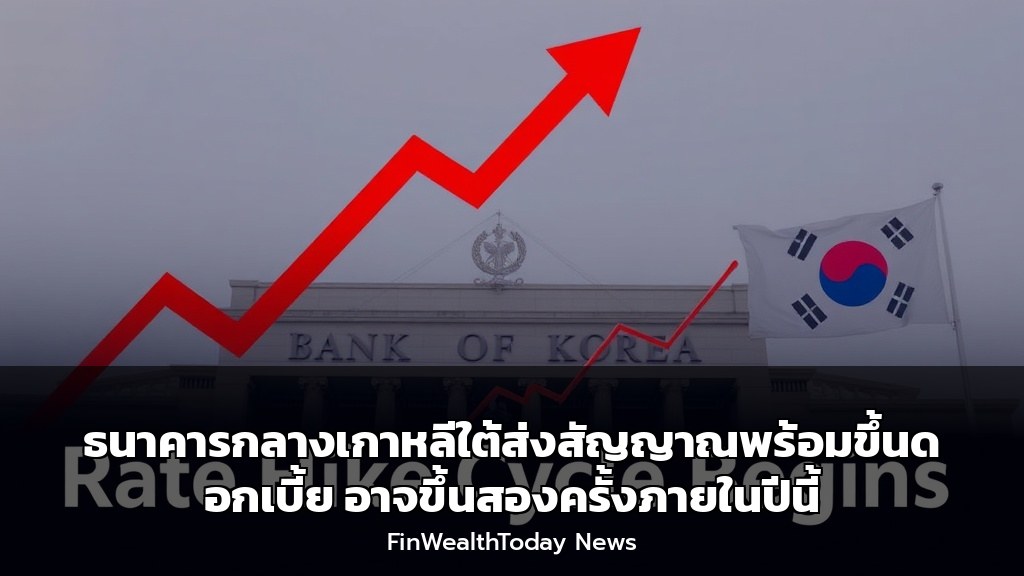
ธนาคารกลางเกาหลีใต้ (Bank of Korea: BOK) ได้สร้างความประหลาดใจให้กับตลาดการเงินทั่วโลก ด้วยการส่งสัญญาณอย่างชัดเจนถึงการเริ่มต้นของวัฏจักรการขึ้นดอกเบี้ย หลังจากที่หยุดนิ่งยาวนานถึง 8 ครั้งติดต่อกัน โดยคณะกรรมการนโยบายการเงิน (MPB) มีมติคงดอกเบี้ยไว้ที่ 2.5% ต่อปี แต่ได้ปรับเปลี่ยนภาษาของแถลงการณ์อย่างมีนัยสำคัญ พร้อมเผยแพร่ “Dot Plot” เป็นครั้งแรก ซึ่งบ่งชี้ว่าอัตราดอกเบี้ยนโยบายอาจพุ่งขึ้นไปถึง 3% ภายใน 6 เดือนข้างหน้า หรือเทียบเท่ากับการขึ้นดอกเบี้ยสองครั้ง (0.50%)
- การเปลี่ยนผ่านครั้งสำคัญของนโยบายการเงินเกาหลีใต้: การที่ BOK เปลี่ยนถ้อยคำจาก “ความเป็นไปได้และจังหวะเวลาในการปรับลดดอกเบี้ยเพิ่มเติม” ในเดือนพฤศจิกายนปีก่อน มาเป็น “การพิจารณาปรับขึ้นดอกเบี้ย” ในครั้งนี้ ถือเป็นการปิดฉากวัฏจักรดอกเบี้ยขาลง และเปิดประตูสู่วัฏจักรขาขึ้นอย่างเป็นทางการ นักลงทุนควรจับตาว่าแรงกดดันด้านเงินเฟ้อที่ยังคงเหนียวแน่น โดยเฉพาะจากราคาพลังงานและสินทรัพย์ที่ปรับตัวสูงขึ้น คือปัจจัยหลักที่ผลักดันให้ BOK ต้องดำเนินนโยบายที่เข้มงวดขึ้น
- Dot Plot บ่งชี้ทิศทางดอกเบี้ยที่ชัดเจน: การเผยแพร่ Dot Plot ซึ่งเป็นเครื่องมือที่ธนาคารกลางสหรัฐฯ (Fed) ใช้เป็นประจำ ถือเป็นนวัตกรรมใหม่ของ BOK ที่ช่วยเพิ่มความโปร่งใสและลดความไม่แน่นอนให้กับตลาด โดยคะแนนส่วนใหญ่ (10 จาก 21 คะแนน) ชี้ไปที่ 3% ขณะที่อีก 7 คะแนนชี้ไปที่ 2.75% สะท้อนว่า ตลาดควรเตรียมพร้อมสำหรับการปรับขึ้นดอกเบี้ยอย่างน้อย 1-2 ครั้งภายในเดือนพฤศจิกายนนี้
- ความท้าทายของเศรษฐกิจรูปตัว K และหนี้ครัวเรือน: แม้ BOK จะส่งสัญญาณ Hawkish แต่ก็ต้องเผชิญกับความท้าทายสำคัญภายในประเทศ ได้แก่ ปัญหาการฟื้นตัวทางเศรษฐกิจแบบรูปตัว K ที่รายได้ของกลุ่มครัวเรือนสูงและต่ำแตกต่างกันมากขึ้น รวมถึงภาระหนี้สินภาคครัวเรือนที่ยังคงอยู่ในระดับสูง ซึ่งเป็นปัจจัยจำกัดที่ทำให้วงจรการขึ้นดอกเบี้ยครั้งนี้มีแนวโน้มค่อยเป็นค่อยไป โดยอัตราดอกเบี้ยสูงสุด (Terminal Rate) อาจอยู่ที่ 3.25%
- ผลกระทบต่อตลาดพันธบัตรและค่าเงิน: ทันทีหลังจาก BOK ส่งสัญญาณ อัตราผลตอบแทนพันธบัตรรัฐบาลอายุ 10 ปี (10YKTB) พุ่งขึ้นแตะระดับ 4.2% สะท้อนว่าตลาดกำลัง “วิ่งนำหน้า” นโยบายการเงิน และได้ซึมซับการขึ้นดอกเบี้ยถึง 4 ครั้งไปแล้วบางส่วน นักลงทุนในตลาดตราสารหนี้ควรคาดการณ์ว่า ส่วนต่างระหว่างอัตราผลตอบแทนระยะสั้นและระยะยาว (Yield Curve) มีแนวโน้มแบนราบลง (Flatten) มากกว่าที่จะชันขึ้น (Steepen) เมื่อ BOK เริ่มขึ้นดอกเบี้ยจริงในเดือนกรกฎาคม
- กลยุทธ์การบริหารพอร์ตสำหรับนักลงทุน: ในภาวะที่ดอกเบี้ยกำลังจะปรับตัวขึ้นสูงขึ้น นักลงทุนควรพิจารณาปรับสัดส่วนการลงทุนให้มีความระมัดระวังมากขึ้น โดยเน้นสินทรัพย์ที่ได้รับประโยชน์จากอัตราดอกเบี้ยขาขึ้น เช่น กองทุนรวมตลาดเงิน (MMF) หรือพันธบัตรอายุสั้น ขณะเดียวกันควรหลีกเลี่ยงการลงทุนในสินทรัพย์เสี่ยงที่มีหนี้สินสูง เนื่องจากต้นทุนทางการเงินที่เพิ่มขึ้นจะกดดันผลประกอบการ สำหรับนักลงทุนที่ถือครองเงินสด การขึ้นดอกเบี้ยครั้งนี้ถือเป็นโอกาสในการได้รับผลตอบแทนจากเงินฝากหรือตราสารหนี้ระยะสั้นที่สูงขึ้น
คำแนะนำสำหรับนักลงทุน: การส่งสัญญาณของ BOK ครั้งนี้ไม่ใช่แค่เรื่องของเกาหลีใต้เท่านั้น แต่เป็นสัญญาณเตือนสำหรับตลาดเกิดเหตุอื่นๆ ในเอเชียที่อาจต้องเผชิญกับแรงกดดันเงินเฟ้อและต้องปรับนโยบายการเงินให้เข้มงวดขึ้นตามไปด้วย การติดตามนโยบายของธนาคารกลางสหรัฐฯ (Fed) และธนาคารกลางยุโรป (ECB) ควบคู่ไปกับ BOK จะช่วยให้คุณสามารถวางแผนการลงทุนได้อย่างมีประสิทธิภาพมากยิ่งขึ้น
Full English Translation:
The Bank of Korea (BOK) has surprised global financial markets by clearly signaling the start of an interest rate hike cycle after pausing for eight consecutive meetings. The Monetary Policy Board (MPB) voted to hold the base rate at 2.5% annually but significantly shifted the language of its statement, and published a “Dot Plot” for the first time, indicating that the policy rate could rise to 3% within the next six months, equivalent to two rate hikes (0.50%).
Key Takeaways:
– A Major Monetary Policy Shift: The BOK’s change in wording from “feasibility and timing of additional rate cuts” last November to “consideration of rate hikes” this time marks a formal end to the easing cycle and the beginning of a tightening cycle. Investors should monitor persistent inflationary pressures, especially from energy and rising asset prices, which are driving this hawkish turn.
– Dot Plot Provides Clear Forward Guidance: The introduction of the Dot Plot, a tool commonly used by the US Federal Reserve, is an innovation by the BOK to enhance transparency. With the majority of dots pointing to 3% (10 out of 21) and 7 pointing to 2.75%, markets should prepare for at least 1-2 rate hikes by November.
– K-shaped Recovery and Household Debt Challenges: Despite the hawkish signal, the BOK faces significant domestic challenges: the K-shaped economic recovery widening the income gap, and still-high household debt levels. These factors are likely to keep the tightening cycle gradual, with a terminal rate potentially at 3.25%.
– Impact on Bond Markets and Currency: Following the BOK’s signal, the 10-year Korean Treasury Bond (10YKTB) yield surged to 4.2%, reflecting that markets are “running ahead” of policy and have already partially priced in four rate hikes. Bond investors should anticipate a flattening of the yield curve rather than a steepening once actual hikes begin in July.
– Portfolio Strategy for Investors: In a rising rate environment, investors should consider adjusting allocations towards assets that benefit from higher rates, such as Money Market Funds (MMFs) or short-duration bonds. Conversely, avoid high-leverage risky assets as rising financing costs will pressure earnings. For cash holders, this is an opportunity to lock in higher yields from deposits or short-term instruments.
Investment Advice: The BOK’s signal is not just a local Korean story; it is a warning for other emerging markets in Asia that may face similar inflationary pressures and need to tighten policy. Monitoring the policy paths of the Fed and ECB alongside the BOK will help you plan your investments more effectively.
Citation: https://www.chosun.com/english/market-money-en/2026/05/28/WWDPH57MVNB3DPHZ2SA3GPMPLY


Leave a Reply