

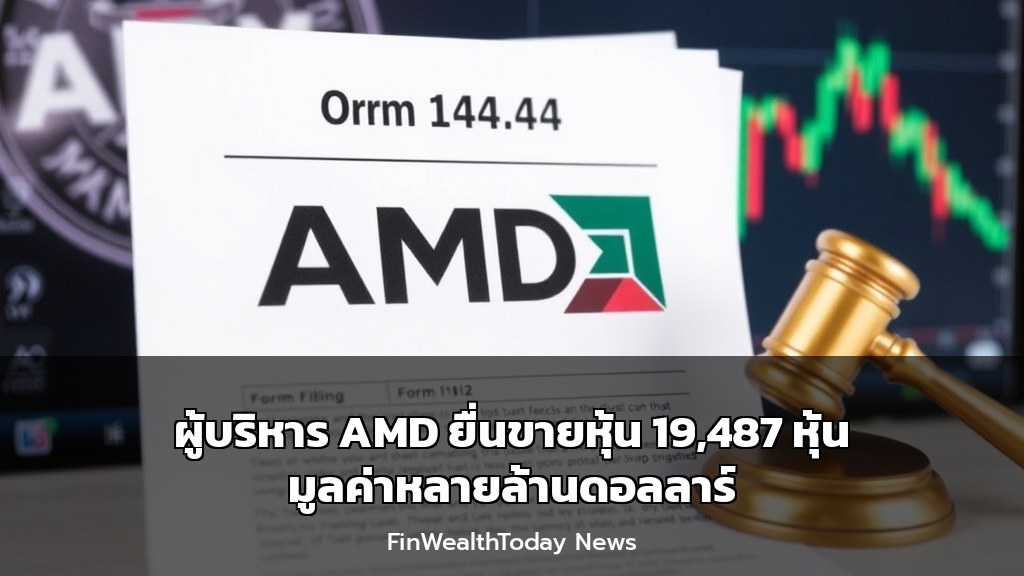
เกาะติดกระแส: รายงานการเสนอขายหลักทรัพย์ (Form 144) ของ AMD โดยผู้บริหารระดับสูง
นักลงทุนไทยที่ติดตามตลาดหุ้นสหรัฐฯ คงเคยได้ยินชื่อ Advanced Micro Devices (AMD) ยักษ์ใหญ่ชิปเซ็ตผู้ท้าชนตลาด AI กันมาบ้าง ล่าสุดมีข้อมูลสำคัญจากสำนักงานคณะกรรมการกำกับหลักทรัพย์และตลาดหลักทรัพย์สหรัฐฯ (SEC) ที่นักลงทุนควรรู้ นั่นคือการยื่นแบบฟอร์ม Form 144 โดยคุณ Forrest E. Norrod กรรมการผู้จัดการกลุ่มธุรกิจ Data Center ของ AMD
รายงานนี้ไม่ได้ระบุจำนวนหุ้นหรือวันที่ขายแน่ชัด แต่เป็นการแจ้งเจตนาในการขายหุ้นตาม Rule 144 ซึ่งเป็นขั้นตอนปกติสำหรับผู้บริหารหรือผู้ถือหุ้นรายใหญ่ที่ต้องการขายหุ้นที่ได้มาจากการออกสิทธิ์หรือแผนจูงใจพนักงาน (Equity Incentive Plan)
มุมมองเชิงลึกสำหรับนักลงทุนไทย
การยื่นแบบฟอร์ม 144 ในครั้งนี้มีความน่าสนใจในหลายมิติ ซึ่งสะท้อนให้เห็นทั้งโอกาสและความเสี่ยงที่นักลงทุนต้องพิจารณาอย่างรอบคอบ
- สัญญาณจาก “คนใน” ต้องตีความอย่างมีชั้นเชิง: การที่ผู้บริหารระดับสูงอย่าง Mr. Norrod แจ้งความประสงค์ขายหุ้น อาจถูกมองเป็นสัญญาณลบในระยะสั้น (Bearish Signal) เนื่องจากเป็น “Insider Selling” อย่างไรก็ตาม เราไม่ควรมองว่าเป็นจุดจบของบริษัท เพราะสาเหตุการขายมักเกิดจากการวางแผนทางการเงินส่วนบุคคล การกระจายความเสี่ยงของพอร์ต หรือการชำระภาษีจากหุ้นที่ได้รับเป็นค่าตอบแทน ซึ่งเป็นเรื่องปกติใน Silicon Valley
- อิทธิพลของตลาด AI และ Data Center: การที่ผู้บริหารจากฝั่ง Data Center ยื่นขายหุ้นในช่วงที่ธุรกิจ AI กำลังบูม อาจสร้างความกังวลว่าการเติบโตของ AMD ในกลุ่มนี้จะชะลอตัวหรือไม่ แต่นักลงทุนควรดูสถิติยอดขายและแนวโน้มผลิตภัณฑ์ใหม่อย่าง MI300 series มากกว่าการเคลื่อนไหวของผู้บริหารเพียงรายเดียว
- กลยุทธ์การลงทุนแบบ Value Investor: สำหรับนักลงทุนสายพื้นฐาน การยื่น Form 144 เป็นเพียง “ข้อมูลประกอบ” ไม่ใช่สัญญาณซื้อ-ขายเด็ดขาด สิ่งที่สำคัญกว่าคือการประเมินมูลค่าที่แท้จริง (Intrinsic Value) ของ AMD เทียบกับคู่แข่งอย่าง NVIDIA และ Intel หากราคาหุ้นปรับตัวลงแรงตามข่าวลบ นักลงทุนที่มีวินัยอาจมองว่านี่คือโอกาสในการสะสมหุ้นในราคาที่น่าสนใจ
ประเด็นสำคัญที่นักลงทุนต้องจับตา
- จำนวนหุ้นที่ขายจริง: ต้องติดตามต่อไปว่าหลังจากยื่นเจตนาแล้ว ผู้บริหารได้ขายหุ้นจริงเท่าไร
- แนวโน้มผู้บริหารคนอื่น: หากมีผู้บริหารระดับสูงยื่น Form 144 พร้อมกันหลายคน อาจเป็นสัญญาณที่ต้องระวังมากขึ้น
- แผนการซื้อหุ้นคืน (Buyback): ดูว่าบริษัทมีแผนซื้อหุ้นคืนเพื่อสร้างความเชื่อมั่นให้กับตลาดหรือไม่
- ผลประกอบการไตรมาสถัดไป: นี่คือปัจจัยสำคัญที่สุดที่จะชี้อนาคตของ AMD มากกว่าการซื้อขายของผู้บริหาร
Full English Translation
Headline: AMD Executive Files Form 144 to Sell 19,487 Shares, Valued at Millions of Dollars
Summary:
Thai investors tracking the US stock market should take note of a key filing from the U.S. Securities and Exchange Commission (SEC). Mr. Forrest E. Norrod, a Senior Vice President and General Manager of AMD’s Data Center Group, has filed a Form 144 indicating his intent to sell 19,487 shares of AMD common stock.
This report does not specify the exact sale date or price but serves as a standard notice under Rule 144 for insiders looking to sell shares acquired through company equity plans.
Insightful Analysis for Investors:
1. Reading Insider Signals: While insider selling can be a short-term bearish signal, it is often motivated by personal financial planning, portfolio diversification, or tax obligations. It should not be seen as a definitive negative for the company’s long-term health.
2. AI Market Context: The sale by a Data Center executive during the AI boom may raise questions. However, investors should focus on AMD’s product pipeline (e.g., MI300 series) and revenue data rather than a single insider transaction.
3. Value Investing Strategy: For fundamental investors, a Form 144 is just one data point. The core focus should remain on AMD’s intrinsic value versus competitors like NVIDIA. A price dip due to this news could be a potential buying opportunity for disciplined investors.
Key Points to Watch:
* The actual number of shares sold post-filing.
* If multiple top executives file similar forms simultaneously.
* The company’s share buyback program to gauge management confidence.
* The upcoming quarterly earnings report, which is the true driver of the stock price.
Citation: Source: SEC Form 144 Filing for AMD


Leave a Reply