

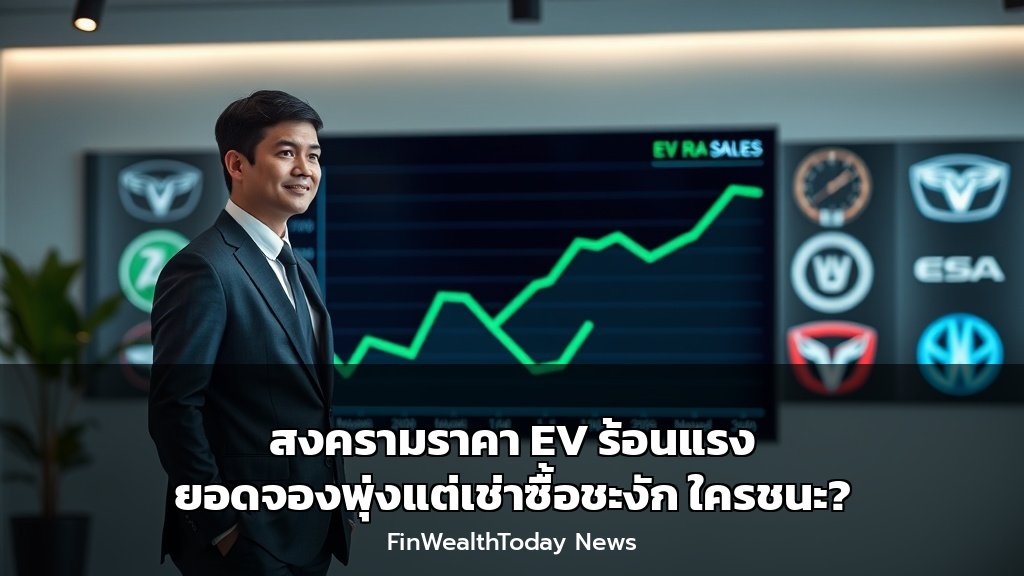
ต้นปีที่ผ่านมา ธุรกิจเช่าซื้อรถยนต์เริ่มมีสัญญาณฟื้นตัวเล็กน้อยจากยอดจองรถยนต์ไฟฟ้า (EV) ที่เพิ่มสูงขึ้นอย่างต่อเนื่อง ท่ามกลางการแข่งขันด้านราคาที่รุนแรงจากผู้ผลิตจีนและแบรนด์ดั้งเดิม แต่ภาพรวมกลับไม่สดใสดังคาด เพราะถึงแม้ผู้บริโภคจะแห่จอง EV จำนวนมาก แต่สถาบันการเงินกลับเข้มงวดในการอนุมัติสินเชื่อเช่าซื้อมากขึ้นจากความกังวลเรื่องหนี้ครัวเรือนและมูลค่ารถมือสองที่ตกต่ำ ส่งผลให้ตลาดเช่าซื้อไม่สามารถดีดตัวตามยอดขายรถยนต์ได้อย่างที่หลายฝ่ายหวังไว้
วิเคราะห์เชิงลึก: ทำไมตลาดเช่าซื้อถึงฟื้นไม่ทัน EV?
-
แนวโน้มการลงทุนและผลกระทบต่อธุรกิจเช่าซื้อ: การแข่งขันด้านราคาในตลาด EV ส่งผลให้บริษัทไฟแนนซ์ต้องประเมินความเสี่ยงใหม่ โดยเฉพาะความเสี่ยงด้านมูลค่าซากของรถยนต์ไฟฟ้าที่อาจลดลงรวดเร็วกว่ารถสันดาป หากมีการปรับลดราคาในรุ่นใหม่ๆ สิ่งนี้ทำให้ไฟแนนซ์เข้มงวดในการให้วงเงินสูงสุด (Loan-to-Value) แก่ผู้ซื้อ EV ส่งผลกระทบต่อกลยุทธ์การจัดการสินทรัพย์ของนักลงทุนในธุรกิจนี้
-
เทรนด์ Crypto และเศรษฐกิจดิจิทัล: แม้ตลาด EV จะร้อนแรง แต่นักลงทุนรุ่นใหม่ที่มุ่งเน้นการลงทุนในสินทรัพย์ดิจิทัล อาจมองหาช่องทางกระจายความเสี่ยงผ่านการถือครองที่หลากหลาย เช่น การลงทุนในหุ้นกลุ่ม EV และเทคโนโลยีแบตเตอรี่ ซึ่งเป็นธีมแห่งอนาคต มากกว่าการซื้อรถยนต์ที่ต้องพึ่งพาสินเชื่อเช่าซื้อซึ่งมีต้นทุนสูงขึ้นในภาวะดอกเบี้ยขาขึ้น
-
กลยุทธ์บริหารความมั่งคั่งส่วนบุคคล: สำหรับนักลงทุนที่กำลังจะซื้อรถ EV การทำความเข้าใจเรื่องต้นทุนรวมในการเป็นเจ้าของ (Total Cost of Ownership) เป็นเรื่องสำคัญ โดยเฉพาะค่าเสื่อมราคาและค่าใช้จ่ายในการชาร์จไฟ ในภาวะที่ดอกเบี้ยเช่าซื้อยังสูง การผ่อนดาวน์ให้มากกว่า 30% เพื่อลดภาระดอกเบี้ย หรือการเลือกซื้อ EV มือสองที่ราคาลงตัวแล้ว อาจเป็นกลยุทธ์ที่ชาญฉลาดกว่า
A Comprehensive Analysis
The surge in EV bookings in Thailand, fueled by intense price wars among global manufacturers, has painted a misleading picture of the market’s overall health. While consumer demand for electric vehicles is at an all-time high, the auto loan (เช่าซื้อ) sector is struggling to recover. This disconnect stems from tightening credit conditions as financial institutions remain wary of high household debt and the rapid depreciation of EV models. For investors, this divergence signals a critical shift: the automotive financing market may see slower growth compared to the EV sales volume itself, as lenders prioritize risk management over market share expansion.
Key Insights for Investors:
– The current price war will likely compress margins for EV dealers and producers, making financing partners crucial for survival.
– Cryptocurrency and tech-focused investors should note that while EV sales are a clear growth trend, the health of the supporting finance infrastructure is under strain, suggesting a volatile near-term outlook for the broader automotive sector.
– Personal wealth strategy in this environment should focus on liquidity. Instead of taking full high-interest loans for a new EV, consider leasing or pre-owned vehicles to preserve capital for higher-return investments.
According to data and analysis from the automotive industry news resource, the first quarter of the year showed an unusual pattern:
อีวีจี reported a 40% spike in EV reservations, but bank loan approval rates for such vehicles remained flat. This bottleneck highlights that raw demand does not guarantee a healthy market.
FAQ
Q1: EVs are selling well, so why is the auto loan market not recovering?
A1: While EV reservations are high, banks and financial institutions are being much more cautious in approving loans. High household debt levels, rising interest rates, and fears that EV resale values will plummet quickly due to price wars (as seen with Tesla and Chinese brands) make lenders less willing to take risks. Therefore, many approved bookings are not converting into actual loan agreements.
Q2: Should I buy an EV now or wait as an investor?
A2: As an investment, buying a brand-new EV right now carries significant depreciation risk. The ongoing price war means your car could lose 15-30% of its value in the first year alone. A better strategy is to wait for market stabilization or consider a low-mileage used EV. For wealth management, consider the high interest on loans versus the opportunity cost of deploying that capital elsewhere, such as in tech or renewable energy stocks.


Leave a Reply