

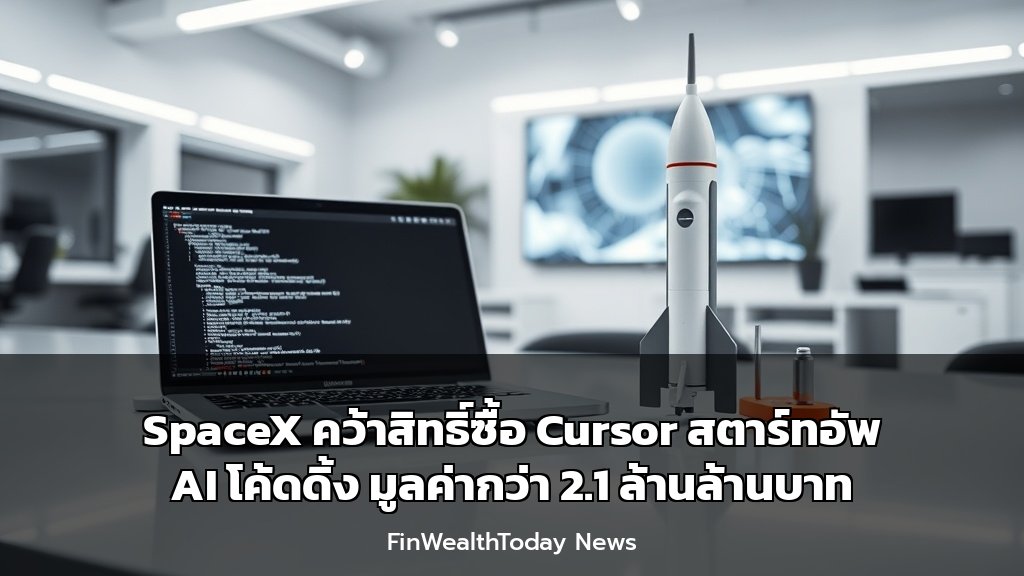
การเคลื่อนไหวครั้งใหญ่ในวงการเทคโนโลยีกำลังดึงดูดความสนใจจากนักลงทุนทั่วโลก เมื่อ SpaceX บริษัทอวกาศของ Elon Musk ตกลงทำสัญญามูลค่าสูงถึง 60,000 ล้านดอลลาร์สหรัฐ (ประมาณ 2.1 ล้านล้านบาท) เพื่อรับสิทธิ์ในการเข้าซื้อกิจการ Cursor สตาร์ทอัพด้าน AI สำหรับช่วยเขียนโค้ดโปรแกรม ข่าวนี้ไม่เพียงสะท้อนความเร่งรีบของยักษ์ใหญ่ด้านเทคโนโลยีในการครอบครองนวัตกรรม AI ชั้นนำ แต่ยังชี้ให้เห็นถึงแนวโน้มการลงทุนใหม่ในภาคส่วนที่อยู่ตรงจุดตัดระหว่างปัญญาประดิษฐ์ การพัฒนาซอฟต์แวร์ และอนาคตของอุตสาหกรรมอวกาศ
การเข้าซื้อสิทธิ์ใน Cursor โดย SpaceX เป็นมากกว่าแค่ข่าวการควบรวมกิจการทั่วไป มันคือการเคลื่อนไหวเชิงกลยุทธ์ที่ลึกซึ้ง ซึ่งนักวิเคราะห์การเงินและผู้เชี่ยวชาญด้านเทคโนโลยีต้องจับตามองอย่างใกล้ชิด
- การเพิ่มประสิทธิภาพด้วย AI เป็นปัจจัยสำคัญสำหรับ SpaceX: SpaceX ดำเนินงานด้วยโมเดลที่ต้องการการพัฒนาซอฟต์แวร์ที่ซับซ้อนและรวดเร็วเป็นพิเศษ สำหรับระบบควบคุมการบิน การจำลอง และการออกแบบ การมีเครื่องมือ AI เช่น Cursor ที่สามารถช่วยทีมวิศวกรเขียนโค้ดที่ปลอดภัย มีประสิทธิภาพ และปราศจากบั๊กได้เร็วยิ่งขึ้น ย่อมแปลเป็นความได้เปรียบด้านการแข่งขันที่สำคัญและประหยัดค่าใช้จ่ายมหาศาลในระยะยาว
- การประเมินมูลค่าที่สะท้อนความคาดหวังสูง: มูลค่าการตกลงที่ 60,000 ล้านดอลลาร์ สำหรับสิทธิ์ในการซื้อบริษัทสตาร์ทอัพ แสดงถึงความเชื่อมั่นอย่างยิ่งยวดในศักยภาพของเทคโนโลยี Cursor ที่จะปฏิวัติการพัฒนาซอฟต์แวร์ มูลค่านี้อาจคำนวณจากศักยภาพในการลดต้นทุนการพัฒนาของ SpaceX เอง รวมถึงโอกาสในการใช้เทคโนโลยีนี้เชิงพาณิชย์ในธุรกิจอื่นๆ ของกลุ่มบริษัท Elon Musk
- สัญญาณถึงแนวโน้มการลงทุนใน AI Infrastructure: นี่ไม่ใช่การลงทุนใน AI แบบบริโภคทั่วไป (เช่น ChatGPT) แต่เป็นการลงทุนใน “AI Infrastructure” หรือโครงสร้างพื้นฐานด้าน AI ที่ใช้สร้างผลิตภัณฑ์อื่นๆ โดยตรง สิ่งนี้ชี้ให้นักลงทุนเห็นถึงโอกาสในกลุ่มบริษัทที่พัฒนาเครื่องมือสำหรับนักพัฒนาซอฟต์แวร์และวิศวกร (DevTools & Engineering AI) ซึ่งมีตลาดเฉพาะและมีโอกาสเติบโตสูงตามความต้องการที่เพิ่มขึ้น
- กลยุทธ์การสร้าง Ecosystem แบบปิด: การนำ Cursor เข้ามาอยู่ใต้กลุ่มบริษัทของ Musk เป็นการสร้างระบบนิเวศ (Ecosystem) แบบบูรณาการ ที่เทคโนโลยีสามารถถูกพัฒนาต่อยอดและใช้ประโยชน์สูงสุดภายในกลุ่มก่อน เช่น การใช้ AI ช่วยเขียนโค้ดสำหรับโครงการ Starship, Starlink, หรือแม้แต่ Tesla และ Neuralink ซึ่งสร้างมูลค่าเพิ่มที่ยากจะวัดได้
สำหรับนักลงทุนรายย่อยและผู้จัดการความมั่งคั่ง ข่าวนี้ให้บทเรียนสำคัญ:
1. มองหาความได้เปรียบเชิงปฏิบัติ: เมื่อประเมินบริษัท AI ให้มองว่าเทคโนโลยีของพวกเขาแก้ไขปัญหาที่จับต้องได้ ลดต้นทุน หรือเพิ่มประสิทธิภาพให้อุตสาหกรรมหลักอย่างมีนัยสำคัญหรือไม่ แทนที่จะมองเพียงแค่ความสามารถทั่วไป
2. ติดตามการเคลื่อนไหวของบริษัทชั้นนำ: การเข้าซื้อหรือลงทุนของบริษัทเทคโนโลยียักษ์ใหญ่ (เช่น SpaceX, Google, Microsoft) มักเป็นสัญญาณบ่งชี้ถึงเทรนด์เทคโนโลยีที่อาจจะเติบโตอย่างก้าวกระโดด และเป็นข้อมูลสำหรับการวิจัยหุ้นในภาคส่วนที่เกี่ยวข้อง
3. กระจายความเสี่ยงในธีม AI: การลงทุนในธีม AI ควรพิจารณาการกระจายตัว ไม่ใช่แค่บริษัทที่ให้บริการ AI โดยตรง แต่รวมถึงบริษัทที่ผลิตชิปส่วนสำคัญ สร้างโครงสร้างพื้นฐานคลาวด์ และโดยเฉพาะอย่างยิ่งบริษัทที่สร้างเครื่องมือสำหรับนักพัฒนา (เช่น GitHub Copilot, Cursor) ซึ่งมีฐานรายได้ที่ยั่งยืนจากกลุ่มลูกค้าองค์กร
การรายงานข่าวนี้สอดคล้องกับข้อมูลจาก TechCrunch ซึ่งให้รายละเอียดเกี่ยวกับความเคลื่อนไหวของบริษัทสตาร์ทอัพด้านเทคโนโลยี
The recent announcement that SpaceX has secured a deal worth $60 billion for the right to acquire Cursor, an AI-powered coding assistant startup, represents a seismic shift in the technology investment landscape. This move, far beyond a simple acquisition rumor, is a strategic gambit by one of the world’s most innovative companies and offers critical insights into future trends at the intersection of artificial intelligence, software development, and advanced engineering.
A deep dive into this deal reveals several key financial and strategic implications:
- Operational Efficiency as a Core Driver: SpaceX’s operations are defined by extremely complex and rapid-cycle software development needs for flight control, simulation, and spacecraft design. Integrating a tool like Cursor, which can assist engineers in generating safer, more efficient, and less error-prone code at unprecedented speeds, provides a direct competitive advantage. The potential reduction in development time and cost for missions and products is a tangible financial benefit that justifies significant upfront investment.
- A Valuation Reflecting Transformative Potential: The staggering $60 billion price tag for an option to acquire a startup underscores the immense perceived value of AI-driven development tools. This valuation is likely based on a combination of Cursor’s potential to drastically lower internal R&D costs at SpaceX and its broader commercial applicability across Elon Musk’s other ventures (like Tesla, Neuralink, and The Boring Company), creating a powerful, synergistic software development ecosystem.
- Highlighting the “AI Infrastructure” Investment Theme: This deal redirects investor focus from consumer-facing AI applications to “AI Infrastructure”—the tools that build the future. Cursor falls into the category of AI for developers (AI DevTools), a sector poised for massive growth as every software company seeks to leverage AI to enhance productivity. Investors should scrutinize companies building essential AI tools for professionals in coding, design, and engineering.
- Strategic Vertical Integration and Ecosystem Lock-in: Bringing Cursor in-house allows SpaceX to create a tightly integrated, proprietary technology stack. The AI can be specially trained on SpaceX’s unique codebases and engineering challenges, creating a bespoke tool that becomes a core, defensible asset. This strategy of building a closed-loop ecosystem enhances long-term value and innovation speed while creating barriers for competitors.
Investment and Wealth Management Insights:
For individual investors and wealth managers, the SpaceX-Cursor news provides actionable intelligence:
1. Seek Practical Advantage: When evaluating AI companies, prioritize those solving concrete, high-value problems for industries. Ask: Does this AI directly reduce operational costs, accelerate time-to-market, or solve critical engineering bottlenecks? Tools that enhance productivity for highly-paid professionals (like software engineers) often have clear monetization paths.
2. Follow the Lead of Innovators: Strategic moves by leading technology conglomerates often serve as early indicators of high-growth trends. While not a direct investment signal, it highlights sectors worthy of deeper due diligence, such as AI-assisted design, simulation, and specialized software development.
3. Diversify Within the AI Theme: A prudent investment approach to AI involves diversification across the value chain. Consider exposure not just to AI application companies, but also to enablers: semiconductor manufacturers, cloud infrastructure providers, and critically, companies developing AI tools for other businesses and professionals. The latter often feature recurring revenue models and address a growing, necessity-driven market.
This analysis is informed by reporting from industry sources including TechCrunch, which covers breaking news on technology startups and ventures.
FAQ
Q: Why would SpaceX, a rocket company, want an AI coding tool?
A: SpaceX is fundamentally a software-intensive engineering company. Its rockets, spacecraft, and satellites are controlled by millions of lines of code. An AI tool like Cursor can dramatically accelerate software development, improve code reliability and safety, and reduce costs—all critical factors for maintaining a competitive edge in the aerospace industry.
Q: What does this deal mean for the future of AI startups?
A: It signals that large, established corporations in traditional industries (aerospace, automotive, manufacturing) see immense strategic value in acquiring cutting-edge AI startups, particularly those that enhance core engineering and development processes. This will likely lead to higher valuations for top-tier AI DevTools startups and increased M&A activity in the sector.


Leave a Reply