

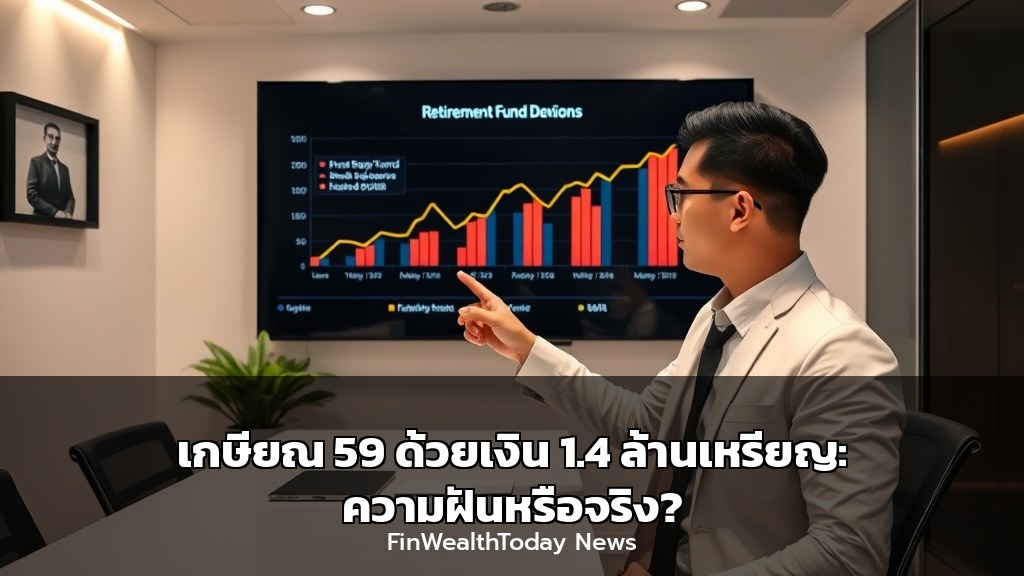
ก้าวแรกสู่เส้นทางการเกษียณด้วยเงิน 1.4 ล้านเหรียญฯ
การตั้งคำถามว่า “เราจะเกษียณได้เมื่อไหร่” และ “ต้องมีเงินเท่าไหร่” คือจุดเริ่มต้นของการวางแผนทางการเงินที่ชาญฉลาด สำหรับคนอายุ 59 ปี ที่มีเงินออม 1.4 ล้านเหรียญสหรัฐ (ประมาณ 50 ล้านบาท) และค่าใช้จ่ายรายเดือนที่ 5,000 เหรียญ (ประมาณ 180,000 บาท) สิ่งนี้ฟังดูเป็นไปได้ แต่ความจริงต้องอาศัยการวิเคราะห์ลึกซึ้งว่ากระแสเงินสดและอัตราผลตอบแทนจะเอื้ออำนวยแค่ไหน โดยเฉพาะในยุคที่ตลาดการเงินผันผวนและเงินเฟ้อที่สูงขึ้น
วิเคราะห์เชิงลึก: กลยุทธ์การเงินเพื่อการเกษียณอย่างยั่งยืนในปี 2025
จากข้อมูลของนักวางแผนการเงินชื่อดัง Christopher Winn แห่งพอร์ตแลนด์ แนวคิดการเกษียณที่ปลอดภัยควรเริ่มจากการตั้งเป้ารายได้ทดแทนหลังเกษียณให้ได้ประมาณ 80% ของเงินเดือนสุดท้าย หากอ้างอิงเงินเดือนเฉลี่ยของชาวอเมริกันที่ 59,428 เหรียญฯ ต่อปี เป้าหมายเงินก้อนนี้ควรอยู่ที่ประมาณ 2 ล้านเหรียญฯ หรือมากกว่า ดังนั้น 1.4 ล้านเหรียญฯ จึงเป็นตัวเลขที่ต้องบริหารจัดการอย่างระมัดระวัง
สำหรับคนวัย 59 ปี ที่มีค่าใช้จ่าย 5,000 เหรียญฯ ต่อเดือน (60,000 เหรียญฯ ต่อปี) สิ่งที่ต้องพิจารณามี 3 ประเด็นหลัก:
- กฎ 4% แบบปรับปรุงใหม่: นักลงทุนยุคใหม่ไม่ควรยึดติดกับกฎ 4% แบบเดิมอีกต่อไป เพราะสภาพตลาดและอัตราดอกเบี้ยที่สูงขึ้นในปี 2025-2026 ทำให้ต้องปรับลดเป็น 3-3.5% ต่อปี เพื่อความยั่งยืน ซึ่งหมายความว่าหากมีเงิน 1.4 ล้านเหรียญฯ คุณสามารถถอนได้เพียง 42,000-49,000 เหรียญฯ ต่อปีเท่านั้น ซึ่งต่ำกว่าค่าใช้จ่ายที่ตั้งไว้ที่ 60,000 เหรียญฯ อย่างชัดเจน
- กลยุทธ์ “Bucket Approach” (การจัดสรรเงินเป็นก้อน): ตามคำแนะนำของ Michelle แห่ง Schwab ควรมีเงินสดหรือสินทรัพย์ปลอดภัย (เช่น พันธบัตรระยะสั้นหรือ CD) ไว้ใช้จ่ายประมาณ 2-4 ปี เพื่อป้องกันการขายสินทรัพย์ในภาวะตลาดขาลง ซึ่งสำหรับค่าใช้จ่าย 60,000 เหรียญฯ ต่อปี คุณต้องการเงินสำรองประมาณ 120,000-240,000 เหรียญฯ ส่วนที่เหลือควรลงทุนในหุ้นเติบโตเพื่อให้ผลตอบแทนทันเงินเฟ้อ
- การเพิ่มเงินสมทบพิเศษ (Catch-up Contributions): ในปี 2025 ผู้ที่มีอายุ 50 ปีขึ้นไปสามารถเพิ่มเงินสมทบในแผน 401(k) ได้สูงสุดถึง 31,000 เหรียญฯ ซึ่งเป็นโอกาสสำคัญสำหรับคนวัย 59 ปี ที่ต้องการเพิ่มกองทุนก่อนเกษียณ โดยเฉพาะหากยังทำงานอยู่ และในปี 2026 เป็นต้นไป เงินสมทบส่วนเกินจะต้องเป็น Roth 401(k) ซึ่งอาจมีนัยยะทางภาษีที่ต่างออกไปสำหรับผู้มีรายได้สูงกว่า 145,000 เหรียญฯ
ข้อสรุปเชิงลึก:
การมีเงิน 1.4 ล้านเหรียญฯ และค่าใช้จ่าย 60,000 เหรียญฯ ต่อปี เสี่ยงที่จะทำให้เงินหมดก่อนอายุ 85 ปี เนื่องจากอัตราการถอน (Withdrawal Rate) สูงเกินไป แต่หากสามารถลดค่าใช้จ่ายลงเหลือ 45,000 เหรียญฯ ต่อปี (หรือ 3.2% ของพอร์ต) หรือเพิ่มเงินออมอีกเล็กน้อยในอีก 6 ปีข้างหน้า (จนถึงอายุ 65) เพื่อให้พอร์ตเติบโตถึง 2 ล้านเหรียญฯ ความเสี่ยงจะลดลงอย่างมีนัยสำคัญ นักลงทุนควรมุ่งเน้นการสร้างกระแสเงินสดที่มั่นคงจากเงินปันผลและพันธบัตร เพื่อชดเชยช่องว่างดังกล่าว
Deep Dive Analysis: Can You Retire at 59 With $1.4M and $5,000 Monthly Expenses?
The question of whether $1.4 million is sufficient for a 59-year-old with $5,000 in monthly expenses ($60,000 annually) is a classic test of retirement planning. According to data from Charles Schwab, a 60-year-old should ideally have saved between 8 to 12 times their annual salary. Using the US average salary of $59,428, this implies a target range of $475,424 to $713,136. On the surface, $1.4 million seems more than adequate, but the devil is in the details of cash flow and longevity.
Key Investment Insights and Strategies for 2025
- Withdrawal Rate Sensitivity: The 4% rule suggests an initial withdrawal of $56,000 annually. However, with current interest rates and heightened market volatility, a more conservative 3.5% withdrawal ($49,000) is recommended. This creates a $11,000 shortfall against the desired $60,000. To bridge this gap, a retiree must either reduce spending or generate additional income through part-time work (the “Barista FIRE” approach) or optimize dividend income.
- The “Sequence of Returns” Risk: This is the single greatest threat for someone retiring at 59. If a major market downturn occurs in the first 3-5 years of retirement, the portfolio’s value can be permanently impaired. To mitigate this, a cash cushion of 2-4 years (as recommended by Schwab’s Michelle) in conservative assets like short-term bond funds is critical. For this retiree, that means holding $120,000 to $240,000 in cash or equivalents.
- Catch-Up Contributions as a Weapon: Even at 59, if the retiree is still working for a few more years, they can supercharge their 401(k). In 2025, the total contribution limit for those 50+ is $31,000. Starting in 2026, catch-up contributions for high earners must go into a Roth 401(k). This strategy allows for tax-diversification and a stronger final push toward the $2 million target suggested by advisor Christopher Winn.
- Asset Allocation for the 60s: Following the Schwab guideline, a 60-year-old should have 8-12 times their salary saved. With $1.4 million saved against an assumed income of $80,000 (to produce the $60k spending), the ratio is 17.5x, which is strong. The portfolio should be weighted 50-60% in equities (for growth against 3% inflation) and 40-50% in fixed income (for stability).
Economic and Wealth Management Context
The current economic landscape in 2025 presents unique challenges. While the Bureau of Labor Statistics (BLS) data shows the average retiree aged 65-74 spends $60,844 annually (with housing at $21,094), this retiree is right at the national average. The key variable is healthcare costs, which often rise faster than general inflation. Prudential’s retirement calculator emphasizes the need to factor in long-term care costs.
Final Verdict: With $1.4 million and $5,000 monthly expenses, early retirement at 59 is risky but not impossible. It requires aggressive risk management, a strict budget (ideally reducing expenses to $4,000/month), and a “bucket strategy” to avoid selling assets in a down market. Without adjustments, the portfolio is statistically likely to fail before age 90.
Suggested Asset Mix (Example)
- Bucket 1 (Cash/Short-term Bonds): $200,000 (15%) – For years 1-3
- Bucket 2 (Intermediate Bonds/CDs): $400,000 (28%) – For years 4-8
- Bucket 3 (Global Equity ETFs): $800,000 (57%) – For growth over 10+ years
This structure allows the retiree to weather a bear market without touching stocks, preserving principal for the long haul.
FAQs
Q1: What is the biggest myth about retirement planning for someone close to 60?
A1: The biggest myth is that Social Security or a fixed withdrawal rate will be enough without active portfolio management. Many believe the 4% rule is a guarantee, but it is a historical guideline. The current high-debt, low-growth environment requires a dynamic approach, including adjusting spending in down years and utilizing tools like Schwab’s savings guide to target 8-12x salary at age 60.
Q2: Should I use a Roth conversion ladder for my 401(k) if I retire at 59?
A2: Potentially, yes. If you have a large pre-tax balance (Traditional 401k/IRA), converting small amounts to a Roth each year while your income is lower (before Required Minimum Distributions at 73) can save you millions over a lifetime. However, you must ensure you have enough after-tax cash to pay the conversion tax. This is a high-value strategy for those with $1.4M and a long horizon.


Leave a Reply