

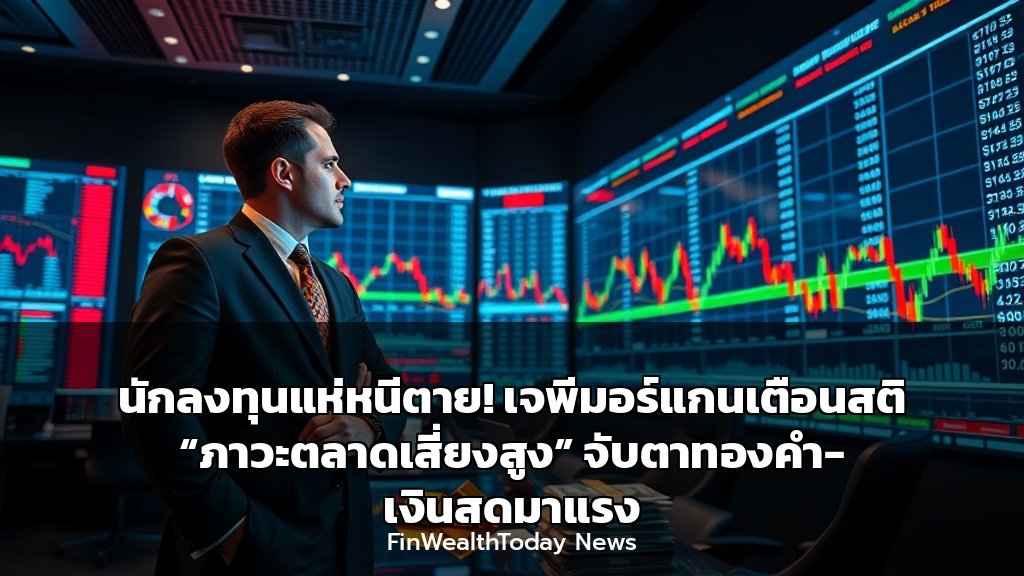
เจพีมอร์แกน ชี้ชัด! นักลงทุนแห่เทขายสินทรัพย์เสี่ยง หันเข้าหาความปลอดภัย – ถึงเวลาต้องปรับพอร์ต?
ในขณะที่ตลาดการเงินโลกกำลังผันผวนอย่างหนักจากความไม่แน่นอนทางเศรษฐกิจและการเมือง แกนนำวงการธนาคารระดับโลกอย่าง JPMorgan Chase ได้ออกมาเตือนในเชิงตรงไปตรงมาว่า กระแสการย้ายเงินทุนจากสินทรัพย์เสี่ยงไปสู่สินทรัพย์ปลอดภัยกำลังทวีความรุนแรงขึ้น สัญญาณดังกล่าวสะท้อนถึงความกังวลของนักลงทุนสถาบันและรายย่อยที่เริ่มมองหาที่พักพิงทางเงินทุนที่มั่นคงมากขึ้น หลังจากที่ตลาดหุ้นทั่วโลกเผชิญแรงกดดันอย่างหนักในหลายสัปดาห์ที่ผ่านมา
การเคลื่อนไหวของเงินทุนครั้งนี้ถือเป็นสัญญาณสำคัญที่นักลงทุนทุกคนไม่ควรมองข้าม เพราะมันบอกเล่าเรื่องราวของความเชื่อมั่นที่กำลังถูกกัดกร่อน การหันไปพึ่งสินทรัพย์อย่างทองคำและเงินสดเป็นจำนวนมาก กำลังถูกมองว่าเป็น “สัญญาณอันตราย” ที่ส่งผ่านจากนักลงทุนที่มีข้อมูลลึกที่สุดในโลก นี่คือประเด็นที่เราจะวิเคราะห์ในเชิงลึกเพื่อให้คุณเข้าใจถึงทิศทางของเม็ดเงินและกลยุทธ์การรับมือกับความผันผวนนี้
การวิเคราะห์เชิงลึก: ทำไม JPMorgan ถึงออกมาเตือน และคุณควรทำอย่างไร?
การเตือนของ JPMorgan ไม่ใช่การคาดการณ์ในสุญญากาศ แต่มีข้อมูลเชิงปริมาณและพฤติกรรมของลูกค้าสถาบันหนุนหลังอยู่ โดยเฉพาะอย่างยิ่งในเรื่องของ Flight to Safety หรือการอพยพของเม็ดเงิน ซึ่งเป็นปรากฏการณ์ที่เรามักเห็นในช่วงก่อนที่ตลาดจะปรับฐานรุนแรงหรือเข้าสู่ภาวะถดถอย
-
สาเหตุหลักที่ทำให้เม็ดเงินไหลออกจากสินทรัพย์เสี่ยง:
- ความกังวลเรื่องนโยบายดอกเบี้ย: ถึงแม้จะมีการพูดถึงการลดดอกเบี้ย แต่ความไม่แน่นอนของเงินเฟ้อที่ยังเหนียวแน่น ทำให้ธนาคารกลางอาจชะลอการผ่อนคลายนโยบาย ส่งผลให้ต้นทุนทางการเงินยังคงสูง
- ความตึงเครียดทางภูมิรัฐศาสตร์: ความขัดแย้งในตะวันออกกลางและความไม่สงบในภูมิภาคอื่นๆ เพิ่มความผันผวนให้กับราคาน้ำมันและห่วงโซ่อุปทาน ซึ่งเป็นตัวแปรสำคัญที่บั่นทอนความเชื่อมั่น
- สัญญาณจากตลาดตราสารหนี้: เส้นอัตราผลตอบแทนที่กลับด้าน (Inverted Yield Curve) เป็นเวลานานเป็นสัญญาณคลาสสิคของภาวะเศรษฐกิจถดถอยที่กำลังจะมาถึง
-
กลยุทธ์การบริหารความมั่งคั่งส่วนบุคคลในภาวะนี้:
- เพิ่มสัดส่วนสินทรัพย์ปลอดภัย: พิจารณาปรับเพิ่มน้ำหนักการลงทุนในทองคำ พันธบัตรรัฐบาลอายุสั้น และเงินสด หรือกองทุนตลาดเงิน (Money Market Fund) ซึ่งมีความผันผวนต่ำและสภาพคล่องสูง
- ลดความเสี่ยงในพอร์ตหุ้น: เลือกหุ้นที่แข็งแกร่ง มีการจ่ายปันผลสม่ำเสมอ และเป็นกลุ่ม Defensive อย่างสินค้าอุปโภคบริโภค สาธารณูปโภค หรือธุรกิจที่เกี่ยวข้องกับการใช้จ่ายที่จำเป็น
- หลีกเลี่ยง Leverage: ในช่วงที่ตลาดผันผวน การใช้เงินกู้หรือ Leverage เพื่อเพิ่มผลตอบแทนเป็นสิ่งที่อันตรายที่สุด ควรใช้เงินสดเท่านั้นในการซื้อสินทรัพย์
- ติดตาม Crypto อย่างระมัดระวัง: สกุลเงินดิจิทัลอย่าง Bitcoin มักถูกมองว่าเป็นสินทรัพย์เสี่ยง เมื่อกระแส Flight to Safety เกิดขึ้น เม็ดเงินในตลาดคริปโตมักถูกถอนออกก่อนเป็นอันดับแรก เนื่องจากความผันผวนที่รุนแรง อย่างไรก็ตาม Bitcoin ที่มีแนวโน้มเป็น “Digital Gold” ในระยะยาวอาจเป็นสินทรัพย์ที่น่าจับตามอง แต่ไม่ใช่ช่วงนี้หากคุณเน้นความปลอดภัย
การที่นักลงทุนแห่มาซื้อทองคำและถือเงินสดเป็นสัญญาณที่น่าเป็นห่วง แต่มันก็เป็นโอกาสในการปรับพอร์ตให้แข็งแรงขึ้นด้วยเช่นกัน
FAQ
-
การเตือนของ JPMorgan ครั้งนี้หมายความว่าควรขายหุ้นทั้งหมดทันทีหรือไม่?
ไม่จำเป็นเสมอไป การขายหุ้นทั้งหมดเป็นกลยุทธ์ที่รุนแรง การเตือนนี้เป็นสัญญาณให้คุณทบทวนพอร์ตการลงทุนและปรับสัดส่วนให้สมดุลมากขึ้น แทนที่จะขายทิ้งหมด แนะนำให้ลดสัดส่วนหุ้นที่มีความผันผวนสูงและหันไปถือสินทรัพย์ปลอดภัยเพิ่มขึ้น รวมถึงเลือกหุ้นที่มีปัจจัยพื้นฐานแข็งแกร่ง -
แล้วทองคำกับเงินสด อะไรน่าลงทุนมากกว่าในตอนนี้?
ทั้งสองอย่างมีบทบาทแตกต่างกัน ทองคำเป็นเครื่องป้องกันความเสี่ยงจากเงินเฟ้อและความผันผวนทางภูมิรัฐศาสตร์ในระยะยาว ส่วนเงินสดหรือกองทุนตลาดเงินมีความยืดหยุ่นและสภาพคล่องสูงกว่า เหมาะสำหรับการรอจังหวะกลับเข้าลงทุน กลยุทธ์ที่ดีที่สุดคือการถือทั้งสองอย่าง โดยพิจารณาจากความต้องการสภาพคล่องและระยะเวลาการลงทุนของคุณ
Analysis from JPMorgan: Investors Rush to Safety Amid Market Turbulence
The world’s largest investment bank, JPMorgan, has issued a stark warning to its clients, signaling a significant shift in market sentiment as a wave of capital moves away from risky assets and into safe havens. This move, characterized by a “flight to safety,” is a classic indicator of growing anxiety among institutional and retail investors alike. The warning comes as global equities face increasing pressure from persistent inflation, high interest rates, and mounting geopolitical tensions. The core message from JPMorgan’s strategists is clear: the environment is entering a phase where preserving capital is becoming more critical than chasing high returns.
This exodus towards gold, U.S. Treasuries, and cash equivalents is not merely a trend but a powerful signal from the “smart money.” When major financial institutions like JPMorgan publicly advise caution, it often precedes a broader market correction or a sustained period of volatility. For individual investors focused on personal wealth management, this is a critical juncture to reassess portfolio risk and ensure adequate protection against downside scenarios. The underlying theme is one of “risk-off,” where the appetite for speculative bets in equities, high-yield bonds, and cryptocurrencies sharply diminishes.
Market Dynamics and Strategic Implications
The current economic landscape presents a complex puzzle for investors. The key drivers behind this safety surge are multifaceted. First, the stubbornness of core inflation has led to uncertainty regarding the pace of future interest rate cuts by the Federal Reserve. Higher-for-longer rates compress corporate profit margins and increase the discount rate on future cash flows, making growth stocks less attractive.
Second, geopolitical risks, particularly the instability in the Middle East and the ongoing conflict in Eastern Europe, have spiked energy costs and disrupted global supply chains. This adds a layer of unpredictability that markets despise, prompting a search for assets that are historically uncorrelated to these shocks.
For the modern investor, this environment demands a strategic pivot. According to JPMorgan’s internal data, which tracks massive flows from their client base, the rotation into money market funds has been accelerating. A recent analysis by Reuters highlights that global money market fund assets have swelled to record highs, confirming this trend.
- Portfolio Rebalancing for Safety: The immediate strategy involves increasing the allocation to “risk-free” or “low-risk” assets. This includes short-duration U.S. Treasuries, investment-grade corporate bonds, and physically backed gold ETFs.
- Equity Sector Selection: Not all stocks are created equal in a downturn. Focus on defensive sectors like healthcare, utilities, and consumer staples. These companies provide essential goods and services, offering stable earnings regardless of the economic cycle. Tech and high-growth sectors, particularly those reliant on future cash flows, are likely to face the most significant headwinds.
- Managing Crypto Exposure: The cryptocurrency market remains highly correlated with risk assets. During a flight to safety, Bitcoin and altcoins often suffer from liquidity drains. While the long-term narrative of Bitcoin as a store of value persists, its short-term volatility makes it a high-risk holding in a capital preservation strategy. It is advisable to reduce or hedge crypto positions until the macro environment stabilizes.
- Cash is King… For Now: Holding a larger cash position provides flexibility and optionality. It allows investors to deploy capital into distressed assets when the panic selling ends. Money market funds currently offer attractive yields (above 5%) with near-zero volatility, making them a compelling parking spot.
In conclusion, the message from JPMorgan is a prudent one. It is not a call to panic, but a call to discipline. Investors should use this opportunity to strengthen their portfolios against potential shocks, focusing on fundamentals and defense over offense until the economic outlook becomes clearer.


Leave a Reply